Comparison Overview
| Feature | Planetary Production Type Ball Mill | Micro Planetary Gear Ball Mill |
|---|
| Primary Purpose | Scale-up & Small-Batch Production | Ultra-Fine R&D & Nano-Grinding |
| Scale | Larger Benchtop to Floor-standing (e.g., 2L - 100L total jar volume) | Small Benchtop (e.g., 0.1L - 2L total jar volume) |
| Key Mechanism | Heavy-Duty Bearings & Direct Drive for high torque and stability | Precision Planetary Gearbox for high speed and rotational accuracy |
| Typical Use Case | Making grams to kilograms of material for prototyping, pilot plants, or small-series production. | Preparing a few grams of sample for analysis, nanomaterial synthesis, or fundamental research. |
| Analogy | A Small Workshop Lathe | A Swiss Watchmaker's Tool |
1. Planetary Production Type Ball Mill
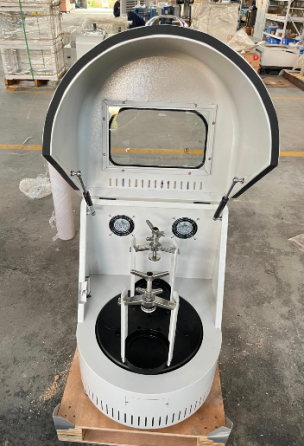
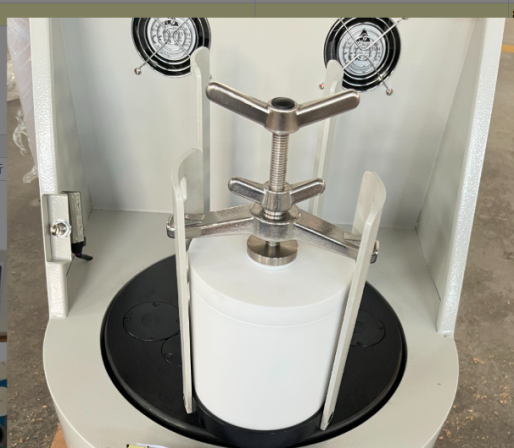
This type is engineered for scaling up processes developed on smaller laboratory mills. It bridges the gap between R&D and full-scale industrial production.
Detailed Description & Key Features:
Design Philosophy: Robustness and Capacity.
Larger Size & Power: These are physically larger machines with more powerful motors to handle the significant inertia and weight of multiple, large-volume jars (e.g., 1L, 2L, or even 5L jars each).
Heavy-Duty Construction: Built with reinforced structures, large-diameter shafts, and heavy-duty bearings to minimize vibration and ensure smooth, stable operation under full load. This is critical for consistent results and machine longevity.
Focus on Torque: The drive system is optimized for high torque at slightly lower maximum speeds compared to micro mills. This ensures it can rotate jars filled with dense materials and heavy grinding media without stalling.
Core Applications:
Small-Batch Production: Manufacturing small quantities of advanced materials like specialty alloys, ceramics, or battery powders.
Pilot Plant Studies: Producing enough material for the next stage of testing, such as forming prototypes, sintering trials, or small customer samples.
Process Scale-Up: Verifying that a grinding or mechanical alloying process developed on a 100ml mill works effectively in a 2L or 10L jar, which is not a linear scaling process.
Typical Specifications:
Jar Capacity: Often 4 x 1L, 4 x 2L, or 2 x 5L configurations.
Total Volume: Labeled as 4L, 8L, 10L, 20L, etc.
Speed: May have a lower maximum RPM (e.g., 0-650 rpm) but with immense power behind it.
Control System: Sophisticated programmable logic controllers (PLCs) for precise replication of complex cycles over long periods.
In summary: A Production Type Planetary Ball Mill is a workhorse designed for output, durability, and replicating lab success at a larger, more practical scale.
2. Micro Planetary Gear Ball Mill
This type is the pinnacle of precision research and development. The term "Micro" refers to both the small sample sizes it can handle and the fine (micro/nano) particle sizes it can achieve.
Detailed Description & Key Features:
Design Philosophy: Precision and High Energy.
Planetary Gearbox: This is the defining feature. Instead of a simpler belt or direct drive, it uses a complex, precision-engineered planetary gear system to achieve the sun-and-planet rotation.
Advantages: Allows for extremely high rotational speeds (e.g., up to 2000 rpm or more), precise speed control, and exceptional rotational stability. This generates the highest possible energy impacts for a machine of its size.
Compact and Precise: These are small, benchtop instruments designed for minimal vibration and maximum accuracy. They are the tool of choice for fundamental research where variables must be tightly controlled.
Focus on Speed & Finesse: The gear drive is optimized for achieving the extreme centrifugal forces needed for nano-dispersion and mechanical alloying on a small scale.
Core Applications:
Nano-Material Synthesis: Creating graphene, nanotubes, and other nanoparticles where the highest energy impact is required.
Mechanical Alloying R&D: Developing new alloy compositions with only a few grams of starting materials.
Sample Preparation for Analysis: Preparing ultra-fine, homogeneous samples for sensitive techniques like XRD, XRF, and SEM where a perfect grind is essential.
Wet Grinding of Dispersions: Creating stable colloidal suspensions and nano-slurries.
Typical Specifications:
Jar Capacity: Typically uses 50ml, 100ml, or 250ml jars.
Total Volume: Labeled as 0.4L, 0.8L, 2L, etc.
Speed: Very high maximum RPM (e.g., 0-1100 rpm, with some models reaching 2000+ rpm).
Control System: Highly accurate digital controls, often with sophisticated programming for complex cycle sequences.
In summary: A Micro Planetary Gear Ball Mill is a precision instrument designed for pushing the boundaries of material science at the smallest scales, prioritizing extreme fineness and experimental control over throughput.
Choosing Between Them
Choose a Production Type if: Your goal is to make more material. You have a proven process from a small mill and now need to produce viable quantities for application testing or small-scale manufacturing.
Choose a Micro Gear Type if: Your goal is to discover and refine a process. You are working with expensive or rare materials, need the absolute finest grind possible, and are conducting fundamental R&D where precision is more important than volume.